Schedule a
Free Consultation
Exceptional Legal Care With A Personal Touch – Serving New Port Richey With Expertise And Compassion
Contact Hero
Home page contact form
"*" indicates required fields
When you visit a store, restaurant, or someone else's property, you have a right to expect a reasonably safe environment. Florida law holds property owners and businesses accountable when their negligence — a wet floor left unmarked, a broken step left unrepaired, inadequate security — causes someone to get hurt. If you were injured on another person's or company's property in the New Port Richey area, McPherson & Thomas, P.A. can help you pursue the compensation you deserve.
Call us at 727-848-8892 or Schedule A Free Consultation Today
Are you in need of a dedicated New Port Richey personal injury lawyer? McPherson & Thomas, P.A. has extensive experience and regularly handles such claims on a contingency fee basis, with no costs or fees upfront. We don’t see a penny unless we win your case. Schedule a free case review with our New Port Richey premises liability attorneys today.
What Is Premises Liability Under Florida Law?
Premises liability is a legal theory that holds property owners, businesses, and other parties responsible for injuries that occur on their property due to unsafe conditions. Under Florida law, the duty owed to you depends on your status as a visitor:
- Invitees receive the highest duty of care. This includes customers at stores and restaurants, visitors to commercial businesses, and anyone invited onto property for a business purpose. Property owners must actively inspect for hazards and promptly fix or warn of any dangerous conditions.
- Licensees are social guests invited onto property. Owners must warn of known dangers that the guest is unlikely to discover themselves.
- Trespassers generally have limited protection — though property owners cannot willfully harm them, and children are treated as a special exception under Florida's attractive nuisance doctrine.
Florida's modified comparative negligence law (§768.81) also affects how damages are calculated. If you are found partially at fault for your own injury, your compensation is reduced proportionally. If you are found more than 50% at fault, you may be barred from recovery entirely. This makes it critical to have an experienced attorney investigating the facts on your behalf from the very beginning.
Common Types of Premises Liability Claims We Handle
Slip-and-Fall and Trip-and-Fall Accidents
These are the most common premises liability claims in Florida. A slip-and-fall occurs when a property owner fails to address a wet or slippery surface — a spilled drink in a grocery aisle, a freshly mopped floor with no warning sign, or a rain-slicked entryway. A trip-and-fall involves raised thresholds, uneven flooring, loose carpeting, cracked sidewalks, or other hazards that catch a visitor's foot. Injuries from these accidents range from sprains and fractures to traumatic brain injuries and spinal cord damage.
Grocery Store and Retail Store Accidents
High-traffic retail environments are among the most common locations for premises liability injuries in the New Port Richey and Pasco County area. Our attorneys have experience handling claims involving injuries at stores including Walmart, Publix, Winn-Dixie, Target, and similar retailers. These companies have in-house legal teams and aggressive insurance carriers — having your own attorney levels the playing field. Large grocery and retail chains see enormous daily foot traffic, which means spills, falling merchandise, and hazardous display setups occur regularly. When the store had notice of the hazard and failed to act, they can be held liable.
Home Improvement Store Accidents
Stores like Home Depot and Lowe's present unique injury risks — heavy overhead merchandise, forklifts operating in customer areas, and stacked materials that can fall. Injuries in these settings can be serious, and both companies are known to defend cases aggressively. Our attorneys understand how to build these claims and present them effectively.
Restaurant Injuries
Restaurants have a duty to maintain safe walking surfaces, properly mark hazards, train staff to respond quickly to spills, and maintain their premises in a condition that protects customers. Whether the injury occurred in the dining room, at the entrance, or in a parking lot owned or maintained by the restaurant, these claims follow the same premises liability framework.
Negligent Security
Property owners — including hotels, apartment complexes, parking garages, and event venues — have a responsibility to provide adequate security to protect guests from foreseeable criminal activity. If you were the victim of an assault, robbery, or other crime on someone else's property, and the owner failed to provide reasonable security measures (working lighting, secure locks, surveillance, security personnel), you may have a negligent security claim. Florida courts evaluate whether the crime was foreseeable based on the history of incidents at or near the property.
Dog Bites
Under Florida Statute §767.04, dog owners are strictly liable for bites that occur when the victim is lawfully on the property — regardless of whether the owner knew the dog was dangerous. If you were bitten on someone else's property, you may have both a dog bite claim and a premises liability claim depending on the circumstances.
Swimming Pool Accidents
Florida's year-round warm weather means pool accidents are a consistent source of premises liability claims. Property owners — both residential and commercial — must maintain appropriate barriers, warning signage, and safety equipment. Lack of a functioning pool enclosure, inadequate supervision, or unsafe conditions can form the basis of a valid premises liability claim.
Golf Cart Accidents
Golf carts are legal to operate on public roads in New Port Richey and are widely used throughout Pasco County. Accidents involving golf carts — including those on private property, in communities, or in commercial parking areas — can result in serious injuries given the limited protection these vehicles offer. If you were injured by a negligently operated or maintained golf cart on another's property, you may have a valid claim.
Parking Lot and Exterior Hazards
A property owner's duty of care extends to the exterior of their premises, including parking lots, sidewalks, and entryways. Cracked pavement, poor lighting, missing curb cutouts, and standing water are all examples of hazards that can give rise to liability.
Injured From An Accident? Call Our Experienced Attorneys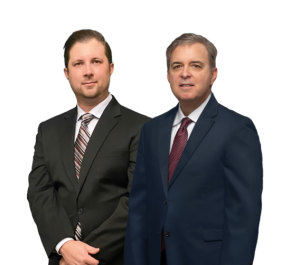
Premises Liability vs. General Negligence: What's the Difference?
People often ask how premises liability differs from a general negligence claim. The distinction comes down to the basis for the duty owed.
In a general negligence claim, a duty arises from the relationship between the parties or from a person's conduct — a driver owes a duty to other road users, a doctor owes a duty to their patient.
In a premises liability claim, the duty arises specifically from the ownership or control of property. The property owner or occupier is responsible for the condition of the property itself — not just their personal conduct. A business that is unaware of a dangerous condition on its floor can still be liable if a court finds that a reasonable inspection would have revealed it.
In practice, many incidents involve both. A grocery store employee who creates a hazard and fails to clean it up introduces both an employee negligence theory and a premises liability theory. Our attorneys evaluate every available theory of liability when building your case.
Florida Premises Liability Law: Key Standards
Notice Requirement
For slip-and-fall claims in transitory foreign substance cases — typically involving spills in commercial settings — Florida Statute §768.0755 requires you to prove that the business had actual or constructive knowledge of the dangerous condition. Constructive knowledge can be established by showing the condition existed long enough that the business should have discovered it through reasonable inspection, or that the condition occurred regularly enough to be foreseeable.
Comparative Fault
Florida follows a modified comparative negligence standard. Even if you were partially at fault — for example, you were distracted when you slipped — you can still recover damages as long as your share of fault does not exceed 50%. Your recovery will be reduced by your percentage of fault.
Statute of Limitations
Florida's statute of limitations for most personal injury and premises liability claims is two years from the date of injury (§95.11). Missing this deadline almost always means losing your right to recover entirely. If your injury involved a government entity — such as a city-owned sidewalk or a public school — the deadline and procedural requirements are different and even shorter. Contact our office as soon as possible to protect your rights.
Children and Attractive Nuisance
Florida law applies a heightened duty of care to situations where a property feature is likely to attract children who may not appreciate the danger. Swimming pools are the most common example. Property owners must take reasonable steps to prevent child access to known hazards, regardless of whether the child is technically a trespasser.
What to Do After a Premises Liability Injury
- Seek medical attention immediately. Your health comes first, and medical records documenting your injuries are critical evidence in your case.
- Report the incident. Notify the store manager, property owner, or security personnel. Request a written incident report and keep a copy.
- Document the scene. If you are physically able, photograph the hazard, your injuries, and the surrounding area before conditions change.
- Collect witness information. Names and contact information for anyone who saw what happened can be crucial to your claim.
- Preserve your clothing and footwear. Do not wash or discard what you were wearing — these can be evidence.
- Do not give a recorded statement to insurance companies. Insurers representing the property owner are not on your side. Speak with an attorney before making any statements.
- Contact McPherson & Thomas, P.A. The earlier we are involved, the better positioned we are to preserve evidence, investigate liability, and protect your claim.
How We Build Your Premises Liability Case
Winning a premises liability case requires more than showing you were hurt on someone's property. Our New Port Richey attorneys investigate every angle of your claim, including:
- Establishing the property owner's duty of care and your status as an invitee, licensee, or other visitor
- Proving notice — whether the owner knew or should have known about the hazardous condition through maintenance records, inspection logs, prior incident reports, and surveillance footage
- Causation — demonstrating that the hazardous condition was the direct and proximate cause of your specific injuries
- Preserving and analyzing evidence including security camera footage (which is frequently overwritten within days), witness testimony, expert opinions, and the property's maintenance history
- Documenting your damages thoroughly, including medical records, treatment costs, lost income, and the full impact on your daily life and future
- Negotiating aggressively with the property owner's insurer and, when necessary, taking your case to trial
Damages Available in a Florida Premises Liability Claim
Depending on the facts of your case, you may be entitled to recover:
- Medical expenses — past and future, including emergency care, hospitalization, surgery, physical therapy, and ongoing treatment
- Lost wages — income lost while recovering, and loss of future earning capacity if your injuries affect your ability to work long-term
- Pain and suffering — physical pain and emotional distress caused by the injury and its aftermath
- Loss of enjoyment of life — reduction in your ability to participate in hobbies, activities, and daily routines you enjoyed before the injury
- Property damage — any personal property damaged as a result of the incident
- Punitive damages — in cases involving particularly egregious or intentional conduct, Florida courts may award punitive damages beyond compensatory amounts
The Role of Premises Liability Insurance
Most businesses and property owners carry general liability or premises liability insurance, which is designed to cover exactly these types of claims. However, insurance companies are profit-driven entities — their adjusters are trained to minimize payouts, and an initial settlement offer rarely reflects the true value of your claim. Common tactics include downplaying the severity of your injuries, arguing that you were at fault for the incident, or pressuring you to settle quickly before you understand the full extent of your damages.
Having an experienced premises liability attorney at McPherson & Thomas, P.A. ensures that someone is protecting your interests through every stage of the insurance negotiation — and that you don't leave money on the table.
Serving New Port Richey, Pasco County, and the Surrounding Tampa Bay Area
McPherson & Thomas, P.A. is based in New Port Richey and serves clients throughout Pasco County, Pinellas County, Hillsborough County, and the broader Tampa Bay region. We understand the local courts, the insurance carriers that frequently defend premises liability cases in this area, and the specific hazards — from busy US-19 corridor businesses to waterfront and recreational property — that generate these claims in our community.
If you or a family member has been injured on someone else's property, contact our office today. Consultations are free, there is no obligation, and you pay nothing unless we recover compensation for you.
If any of the above apply to your circumstances, it is pertinent you call McPherson & Thomas, P.A. for a free consultation today so our New Port Richey personal injury lawyers can discuss the specific facts involved in bringing the claim. Feel free to call us at (727) 848-8892 or fill out our online contact form for more information.
Frequently Asked Questions to Premises Liability Lawyer in New Port Richey, FL
Frequently Asked Questions

LEGALLY REVIEWED BY
Legal Team at McPherson & Thomas Law Firm
September 30, 2026
✓ Fact Checked