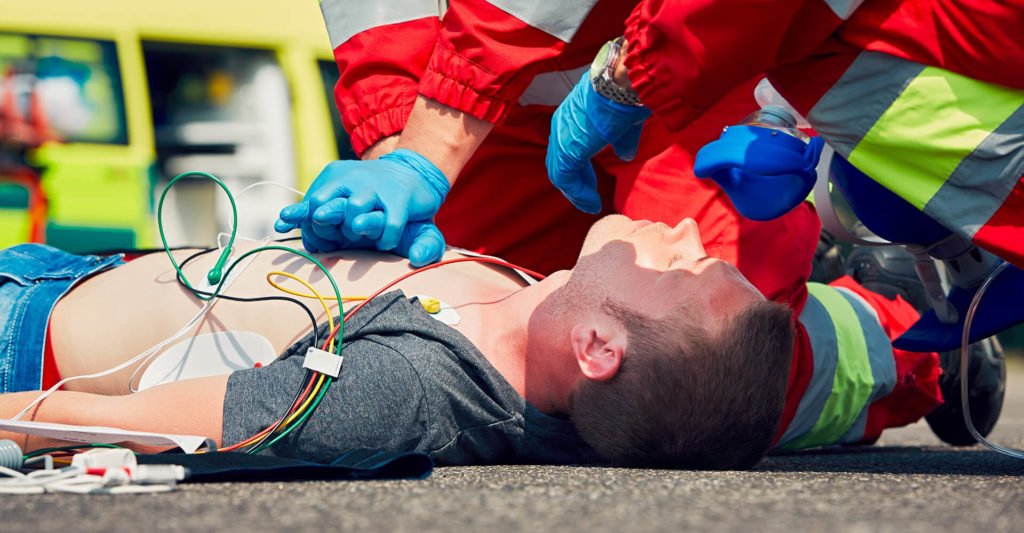
In 1983, a Florida appellate court evaluated a case involving the state’s Good Samaritan Act and arrived at a troubling conclusion: “As it now stands, it does not appear to be a very good idea to render assistance to an accident victim.” That statement was made more than 40 years ago. The law has been updated since — but the fundamental weaknesses the court identified are still worth understanding, especially for nurses, paramedics, EMTs, and other first responders who may find themselves responding to an emergency while off duty.
This blog is written by Ian Thomas of McPherson & Thomas, P.A. — a personal injury attorney and former Pasco County Paramedic-Firefighter who has thought about this issue from both sides of the equation.
What Is the Florida Good Samaritan Act?
Florida’s Good Samaritan Act, codified at Florida Statute §768.13, was enacted to encourage people — including licensed medical professionals — to provide emergency assistance without fear of civil liability if something goes wrong. The statute grants immunity to anyone who gratuitously and in good faith renders emergency care or treatment outside of a hospital, doctor’s office, or other location with proper medical equipment.
The scope of the law is broader than many people realize. It applies to laypeople with no medical training, off-duty healthcare professionals, and even veterinarians treating injured animals on the roadside. Related provisions under §768.139 extend immunity to someone who breaks a car window to rescue a person or pet from a hot vehicle, provided they follow specific steps including contacting law enforcement first.
A Personal Example — Why This Matters in the Field
In 1986, after finishing a 48-hour shift as a Pasco County Paramedic-Firefighter, I was heading home with my family when we came around a bend and found a head-on collision. Two people were already dead. Three others were alive and in urgent need of help. With nothing but beach towels from our car and a few passing motorists willing to take direction, I triaged the scene and sent someone to call Hillsborough County dispatch.
That kind of situation — an off-duty first responder coming upon a serious emergency — is not unusual. EMTs, paramedics, nurses, and law enforcement officers encounter medical crises outside of work on a regular basis. The question of their legal exposure when they choose to help deserves a clear answer.
When Does the Good Samaritan Act Protect You?
Under the current statute, immunity applies when all of the following conditions are met:
- The care is provided during a genuine emergency outside of a medical facility
- The care is gratuitous — you cannot expect or accept payment
- The care is rendered in good faith
- The person receiving care does not object
- You act as an ordinary reasonably prudent person would under the same or similar circumstances
Courts have applied this immunity in cases involving off-duty nurses and physicians who responded to emergencies in public settings. The protection is real — but it comes with meaningful limits that every healthcare professional and first responder should understand.
The Two Weaknesses That Matter Most
After years of working as both a paramedic and a personal injury attorney, it is clear the statute accomplishes less than the legislature intended. Two provisions are particularly problematic.
The “Reasonably Prudent Person” Standard Is No Standard at All
The Act only grants immunity when the rescuer acts as a “reasonably prudent person.” The problem: that is the same standard of care every person owes to others at all times — with or without a Good Samaritan statute. When a driver heads home from work, they must drive as a reasonably prudent person. There is nothing special about that bar. A statute that grants immunity only for conduct that was already legally required provides very little actual protection, and a determined plaintiff’s attorney can argue almost any adverse outcome was a deviation from that standard.
The “Without Objection” Requirement Creates Problems for First Responders
The Act’s immunity only applies when treatment is rendered without objection from the patient. This creates a significant gap in field medicine. Seriously injured people are sometimes intoxicated, hypoglycemic, or suffering from a stroke — conditions that impair judgment and the ability to consent. These patients may refuse treatment even when refusal could be fatal. Paramedics routinely treat such patients under the doctrine of implied consent. But the GSA’s “without objection” language does not clearly incorporate that doctrine, leaving off-duty responders in a legally uncertain position when a patient who lacks capacity says no.
How the Statute Should Be Fixed
Two amendments would meaningfully strengthen the Act. First, replace the “reasonably prudent person” standard with a “reckless disregard” standard for Good Samaritan situations. This would protect responders unless their actions were genuinely reckless — not just imperfect — which is the level of protection the statute was clearly meant to provide. Second, add language explicitly incorporating implied consent for patients who lack the capacity to refuse treatment, consistent with how trained first responders already operate in the field. Together, these changes would close the gaps that currently make the “immunity” more theoretical than real.
Practical Guidance for Off-Duty First Responders
Despite its weaknesses, the Good Samaritan Act does offer meaningful protection in most situations where a first responder acts in good faith within their training. The practical guidance is straightforward: render only care that is appropriate to the situation and your scope of practice, do not accept any payment, and if a patient appears capable of making decisions and clearly refuses, call 911 and document the refusal rather than proceeding over objection.
None of this is a reason to walk past someone who needs help. First responders who act reasonably and in good faith are unlikely to face a successful civil suit. Understanding the law’s limits simply helps you act in a way that keeps you as protected as possible.
Questions About Florida Personal Injury Law? McPherson & Thomas, P.A. Can Help
Ian Thomas and Jack McPherson represent personal injury victims throughout Pasco County and the surrounding Tampa Bay area. With a background that includes decades of legal practice and Ian’s firsthand experience in emergency medicine as a former Pasco County paramedic, our firm brings a perspective to injury cases that few attorneys can offer. We handle cases on a contingency fee basis — no fees unless we recover compensation for you.
If you have been injured due to someone else’s negligence in New Port Richey or the surrounding area, contact our office today for a free consultation.